By Frank J. Diekmann

As much as it may pain you, me and anyone else within credit unions to admit it, a former banking trade group exec has a good point when it comes to CU acquisitions of banks—members deserve to know how much of their capital is being spent on these deals.
As former ABA exec Keith Leggett wrote here, “…there is a need for greater transparency with regard to credit unions that are acquiring banks. Unfortunately, in many cases, these transactions do not disclose the purchase price for the bank.”
Leggett noted that of the seven deals so far in 2022, just two-– DFCU Financial’s acquisition of First Citrus Bancorporation and Arizona Federal Credit Union’s acquisition of Horizon Community Bank—have disclosed the purchase price.
“Since the beginning of 2016, Hovde Group was an adviser for 19 deals involving a whole bank acquisition by a credit union. However, in 14 of these transactions the selling price was not disclosed,” he observed. “The only reason we know the purchase price for these few transactions is that the banks were publicly traded and had to disclose this information to their shareholders.”
A ’Material Event’
Leggett went on to add, “Since these transactions are large, they should be viewed as a material event by the credit union. As a result, credit unions should disclose the purchase price. Credit union members, as owners of their credit union, have an interest in knowing how much their credit union is paying bank shareholders. This would allow credit union members to determine if this transaction is in their best interest.”

Mr. Leggett is more than correct. He’s on the right side of the moral equation here (and when someone from the American Bankers Association is on the right side of an issue involving credit unions, that should cause everyone to stop and do the pondering thing).
Credit unions can’t keep talking about being member-owner controlled when the member-owners aren’t being told how much of their own money is being spent. Credit unions can’t claim the high ground when these deals are being kept on the secret down-low. Credit unions can’t talk “transparency” when, well, I think you get it.
Not disclosing the price paid implies there was something sneaky or shady. Dancing in the dark is one thing; dealing in the dark is another.
Mr. Leggett suggested NCUA should enact a regulation requiring disclosure to members on these deals. Frankly, a regulation shouldn’t be required. It’s the right thing to do. Do it.
And now, a few other notes:
It Doesn’t Pay to Pay
A group of CU leaders at a recent meeting was asked how many had a program in place paying monetary incentives outside of senior management. About a third of the hands in the room were raised. When the audience was asked how many had found it to be effective, nearly every hand fell.
Putting a Lid on Overspending
Overspending is a top source of anxiety across all generations, according to findings from the latest Affirm Consumer Spending Report.
But you have to wonder how the ongoing inflation numbers are going to affect that.

The survey found the average U.S. consumer worries about money six times a day, with 56% saying they often overextend their spending and are left in a difficult position. And that was before prices began to feel like they were doubling every week.
Living through the pandemic is believed by many (61%) to have made younger generations more financially savvy, Affirm said. Now they have no choice.
“What’s more, survey respondents think that Millennials and Gen Z (53%) are generally better at managing their finances than Gen X and Baby Boomers (33%),”Affirm said.
I can already hear Millennials and Gen Z reaching for the emojis to express their frustration they may never be able to buy a house. Or even move out of their parents’ house.
“However, it is worth noting that while Millennials are the most confident in their finances, they worry about money more than any other generation — an average of seven times per day,” Affirm found.
Again, that’s before inflation really started spiking.
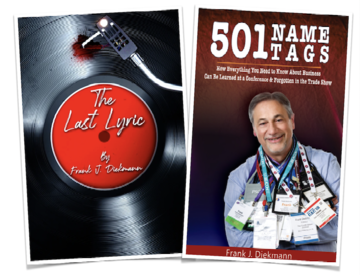
Frank J. Diekmann is Cooperator in Chief of CUToday.info and can be reached at Frank@CUToday.info. Mr. Diekmann is also author of several new book, including the brand new “The Last Lyric,” a humorous satire about a murder investigation at the Rock & Roll Hall of Fame in which every line of dialogue is either a classic pop/rock song title or lyric. Available on Amazon, Apple iBook, Barnes & Noble and Smashwords. Mr. Diekmann is also author of a non-fiction compilation of the very best & worst he has seen and heard in covering more than 500 CU meetings and conferences, “501 Name Tags: How Everything You Need to Know About Business Can Be Learned at a Conference & Forgotten in the Trade Show.”