

By Mike Brown

The economic devastation brought on by the coronavirus pandemic has been severe and far-reaching.
Millions of Americans have lost their jobs, which has led to the worst unemployment figures since The Great Depression. Close to 100,000 small businesses that temporarily shut their doors to combat the spread of the virus are now permanently out of business.
Out of work with no prospects to return, countless Americans have struggled to get by with what little savings they have left. Unemployment benefits can only stretch so far when monthly payments for mortgages and private student loans are still required on top of everyday expenses like groceries and gas.
And now, it’s the holiday season, perhaps the most expensive time of the year.
How will consumers pay for gifts, decorations, food, and travel after battling an economic crisis for the last nine months that has left many with empty bank accounts?
The answer for a good number of people is credit card debt according to a new study from LendEDU, a financial services company based out of Hoboken, N.J.
Key Findings
The credit card debt report from LendEDU, which involved the surveying of 1,000 adult Americans, found 67% of Americans are reducing their holiday budgets this year due to the coronavirus pandemic and its economic impacts. This includes 82% of respondents who have been laid off due to the pandemic, and 86% who are still out of work.
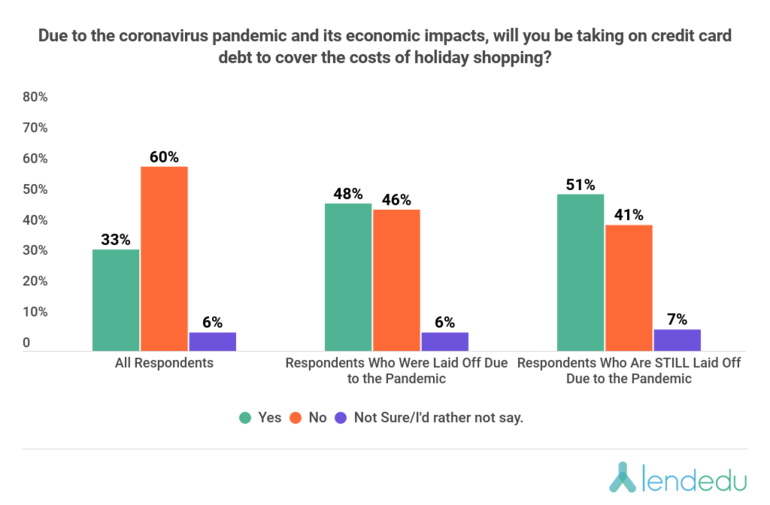
When respondents were asked by LendEDU if they’d be taking on credit card debt to cover holiday expenses, 33% said yes, including 51% who are still unemployed as a result of the pandemic and subsequent recession.
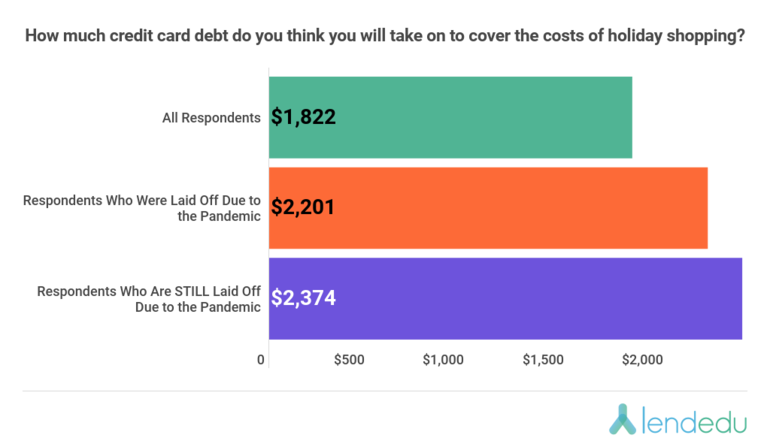
How much credit card debt is coming from 2020 holiday shopping exactly?
LendEDU found the average amount of debt was $1,822 from all respondents but $2,374 for poll participants who are still out of work because of the pandemic.
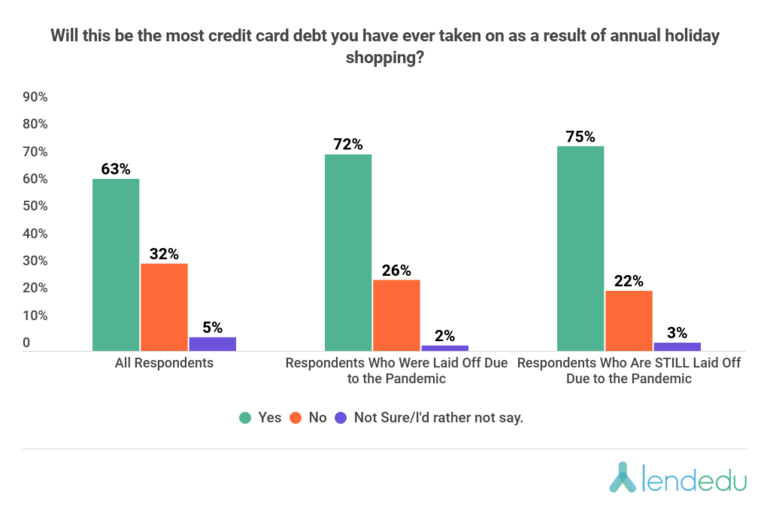
Consumers who are resorting to financing their holiday shopping via credit card debt because of the pandemic recession were then asked if this is a record amount of credit card debt for them…
According to the LendEDU study, this will be a record amount of credit card debt for 63% of all respondents, 72% of respondents who have lost their job due to the pandemic, and 75% of respondents who are still out of work.
Applicable consumers were asked how they are handling this influx of credit card debt. 24% indicated they are taking out a new credit card to run the balance up on, while 68% are simply adding to an existing balance on a credit card they already use.
Getting a Head Start (on Debt)
While holiday shopping in the midst of a recession is leading to large credit card debt balances by itself, LendEDU also found many consumers were piling up considerable credit card debt balances even before the holiday season.
Seventy-four percent of applicable respondents said they had already taken on more credit card debt than they would have liked before holiday shopping began because of the pandemic recession. This includes 86% of poll participants who are still out of work.
LendEDU then asked those respondents for their credit card debt balances pre-holiday shopping and added it to the balances racked up from strictly holiday shopping. Ultimately, the average respondent is now dealing with a debt balance of $2,150, while respondents who are still out of work are dealing with an average credit card debt balance of $2,443.
What Does It Mean For Credit Unions?
First, credit unions that offer credit cards could see a boost in profits from all the interest that is being charged to consumers who are building large debt balances from both holiday shopping and the recession. One of the main ways credit card companies make money is through credit card interest.
LendEDU’s study found many consumers are piling on credit card debt and just adding it to an existing balance that was already quite large. It will take a while to pay all of this debt back and a significant amount of interest will accumulate as a result, which means better profit margins for credit card issuers.
Second, credit unions in the credit card space might want to consider strong, or perhaps stronger, pushes into balance transfer credit cards. The LendEDU study found a good number of people are taking out a new card for holiday shopping.
For these consumers, especially those that already have a significant credit card debt balance, a balance transfer credit card might be a smart idea so that they can transfer any existing debts to a new card that ideally has a lower interest rate to save some money.
With so much debt accumulating due to the pandemic recession and holiday shopping, many people might begin looking into balance transfer credit cards so any credit union in that space could take advantage.
Perhaps Most Important
Third and perhaps most important, credit unions must maintain some fiscal responsibility. While this data might mean more people are applying for credit cards, which is good for credit unions, it also means many people are walking a financial tightrope that could turn ugly fast.
It may seem enticing for credit unions to accept as many credit card applications as possible but it’s important to remember many of these applicants are already in a very tough financial spot due to the recession and holiday shopping.
If all of the sudden many of them are unable to make monthly payments and become financially insolvent, the credit unions will be the ones that end up suffering the most as they will be owed plenty in outstanding debts but have limited chances of actually collecting on those debts.
With credit card debt on the rise, credit unions must balance their desire to make profits with fiscal responsibility so that they can maintain a healthy balance sheet.
Mike Brown is director of communications with LendEDU.