

By Anthony Hernandez and Melissa Ashley
The credit union system has long prided itself on resilience, cooperation, and community focus. But resilience requires preparation—and the opportunity is before us to strengthen one of our most effective tools for weathering financial stress.
Established by Congress in 1979 and managed by the NCUA, the Central Liquidity Facility (CLF) is a federally backed lending facility designed to provide emergency liquidity to credit unions. It’s a cooperative structure, owned by its member credit unions, and intended to promote financial stability across the system. It’s our version of the Federal Reserve’s discount window—a critical backstop and safety net designed to ensure credit unions can meet liquidity needs and support lending during times of economic disruption.
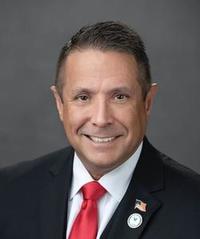
Anthony Hernandez
During the pandemic, temporary enhancements allowed corporate credit unions to act as agents and purchase CLF stock on behalf of a subset of credit unions (those $250 assets and below). This dramatically expanded CLF access by eliminating the burden these smaller credit unions face in purchasing such stock individually. As a result, this cooperative model brought more than 3,500 credit unions under the CLF umbrella, enabling continued lending and financial support when it mattered most.
Enhancements Expired In 2022
When these enhancements expired in 2022, these credit unions lost access to this vital safety net, representing an approximately $10-billion contraction in available liquidity. It disproportionately impacted the smallest credit unions in our system—defense credit unions serving military families, minority-designated institutions, and small community lenders. These are the credit unions least likely to have alternative liquidity options, yet still on the front lines to face urgent member needs during crises.
The NCUA Central Liquidity Facility Enhancements Act, a bi-partisan bill introduced by Senators Padilla (D-CA) and Cramer (R- ND), seeks to modernize and make the successful pandemic-era CLF enhancements permanent. These changes are not only timely but essential to ensuring that credit unions, especially the 2,900 credit unions in our system that are currently under $250 million in assets, have access to reliable liquidity tools. The system’s corporate credit unions are ready to support.
We know that many of these smaller community-based lenders don’t often have the same access to liquidity through a Federal Home Loan Bank, capital markets or other sources of emergency funds like larger credit unions do. To echo the Louisiana Corporate CU that proudly served as an agent member of the CLF during the last authorization, “we stand ready to do it again,” but as their CEO noted – “we need Congress’s help to make that possible.”
Providing Liquidity To Credit Unions Nationwide

The NCUA’s board (comprised of both parties’ appointees) also unanimously requested these changes be made permanent. The reason is simple: the reforms have a proven track record, and they come at no cost to the American taxpayer. The CLF is funded by credit unions themselves – through stock subscriptions and investments – not by federal appropriations.
We commend the bi-partisan bill being introduced, and encourage it to be further strengthened by allowing corporate credit unions to borrow directly from the CLF for their own liquidity needs—supporting the broader stability of the cooperative system given their vital role in providing liquidity to credit unions nationwide.
As leaders in the movement, we’ve seen firsthand how the CLF enhances system-wide stability. We urge our peers across the industry to raise their voices. Let’s advocate together for a stronger, more resilient credit union system. As the saying goes, “fix the roof while the sun is shining.” By making these CLF enhancements permanent now, lawmakers can reinforce the roof of our financial house before the next storm clouds gather.
Anthony Hernandez is the president and CEO of the Defense Credit Union Council, representing over 200 credit unions serving U.S. military and defense communities. Melissa Ashley is the Chair of the Corporate Credit Union Alliance, an association of the eleven corporate credit unions nationwide, and president/CEO of Corporate One Federal Credit Union.