By Frank J. Diekmann

Get ready.
It’s coming.
And not just any one thing.
More like 900 million things. And they’re headed credit unions’ way.
Last week, as CUToday.info reported here, NCUA released its first-ever compilation of what credit unions of more than $1 billion in assets collect in overdraft and NSF fees, finding the 442 CUs that reported $915,624,727 in OD/NSF income. To be honest, given what’s been happening in California since the release of similar data by its state-chartered CUs (of all asset sizes), I’ve been surprised at how muted the response to the national numbers has been.
That’s not going to last.
If you’re not familiar with what’s taken place in the Golden State, the messaging has not been positive, although it has narrowly targeted just a few credit unions. Those CUs have been subjected to some pretty negative reporting and headlines, with KPBS News in San Diego, for instance, leading its coverage with this: “While leaning into ‘good guy’ image, credit unions charge millions in overdraft fees.”
The good guys took some more hits as the coverage went on to add, “Many credit unions boast about their commitment to community investment. Some even have designations from the federal government for serving low-income populations. But the revenue credit unions generate from overdraft penalties can dwarf the amount of money they invest back into the community.”
One CU featured in KPBS’ reporting, Frontwave CU, now finds itself responding to congressional inquiries (its response is here).
‘Fingerprints All Over It’
Now we have the federal data for every FCU of more than $1 billion in assets, which are being released at the same time the Biden Administration, and in particular the CFPB, is highlighting problem “junk fees.” “Junk” is in the eye of the beholder, of course, and after posting to my LinkedIn Page links to CUToday.info’s reporting on the NCUA data, readers offered comments such as:
- “The Great Circular with NCUA fingerprints all over it. Take your pick. Make loans but don’t incur losses. Offer checking accounts that don’t offset the cost of overdrafts or charge-offs. Reduce merchant banking fees, but then complain about rising net operating expense. Push credit unions into irresponsible loan growth, then complain about the dilution of future liquidity profiles. Direct credit unions to do strategic activities, then complain about lacking performance profiles a year later. Claim concern for smaller credit unions, then permit large institutions to enter their marks and abscond with the market…”
- “If there is no fee for overdrafts, than I am paying for other people’s overdrafts through other fees, higher loan rates or lower savings rates. Someone always pays for lunch.”
Indeed, no free lunches, and yet we seem to increasingly live in a world where someone else is expected to pick up the tab for other’s financial decisions (you can insert your view on student loan debt “forgiveness" here).
Who’s Doing What
Of the $915,624,727 in OD/NSF fees that were reported by the 442 credit unions of more than $1 billion in assets that were required to break out those numbers for the first time on their Q1 call reports, the $178-billion Navy FCU in Vienna, Va., collected by far the most in NSF/OD income, with $77.847 million in overdraft income and $91.750 million in NSF income, for a total of $169.5 million.

The nation’s second and third largest credit unions, State Employees’ CU in North Carolina and Pentagon FCU, collected $3.765 million and $3.059 million in such fees, respectively.
There were a number of credit unions that reported they collected no OD/NSF fees, including Amplify Credit Union in Texas, SelfReliance Credit Union in Illinois, Self Reliance Credit Union in New York, U.S. Eagle Credit Union in New Mexico, United States Senate FCU in Virginia, Self-Help CU in North Carolina, Covantage CU in Wisconsin, Digital Credit Union in Massachusetts, and Alliant Credit Union in Illinois.
The total NCUA data for all 442 credit unions can be viewed in CUToday.info’s The Gov section here.
What Board Member Says
During a media call in conjunction with release of the data, NCUA Board Member Tonya Otsuka said the agency is collecting the information to ensure NSF/OD programs are being structured in a way that is both “reasonable and beneficial to the member-owners” of the credit unions, and for other reasons.
“As we see in multiple instances, people of color and with lower incomes are the ones paying most of the fees,” Otsuka said. “It’s important for NCUA to understand the lay off the land and to make sure members are protected.
“In order to have a fair and competitive marketplace, information needs to be transparent,” Otsuka continued. “Credit union member-owners and the general public have a right to know how much a credit union generates from (overdraft) fees.”
Chewing the Fingernails
In the months leading up to the release of the data, America’s Credit Unions had been chewing down its fingernails over the optics of the numbers, saying that judging credit unions based on just OD/NSF revenue ignores the “positive message” to be found in the “totality” of the value credit unions deliver to members, because it doesn’t take into consideration the “different types of programs and services that credit unions provide.”
Unfortunately for credit unions, that “totality” is more likely to get totaled in the weeks and months ahead. Analysts and media outlets are going to be poring through each CU’s numbers looking for cases where a credit union is getting a disproportionate amount of income from ODs/NSFs. If it appears an underserved or a white hat field of membership, such as the military, is being taken advantage of, it’s going to be California Media Coverage 2.0 on a national scale.
And if you think the banking industry (which has had to disclose its OD/NSF numbers of years) is going to let all this slide, you just bounced a check yourself.
‘Might be Shocking’
“I think $900 million might be immediately shocking…” said Otsuka.
That’s because right or wrong, it is. If the Q1 numbers continue for 2024, that’s going to be more than $3.5 billion in total OD/NSF income, and the bank groups and some in the media are going to imply/criticize/report those neighborhood credit unions aren’t so neigborly anymore.
And don’t make the mistake of thinking the spotlight may only fall on the few. Because it’s really on the many.
It’s nearly midyear. In my first column of this year I wrote about how credit unions have increasingly found themselves the subject of some pretty mud-splattered PR, and suggested that while CUs may not be whistling past the graveyard, they do seem to be humming an awfully cheery tune outside the ER.
So, with just over six months left in the year, what do you think should be done about it?
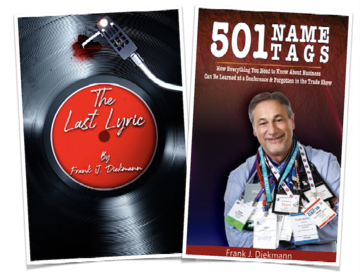
Frank J. Diekmann is Cooperator in Chief of CUToday.info and can be reached at Frank@CUToday.info. Mr. Diekmann is also author of several new book, including the brand new “The Last Lyric,” a humorous satire about a murder investigation at the Rock & Roll Hall of Fame in which every line of dialogue is either a classic pop/rock song title or lyric. Available on Amazon, Apple iBook, Barnes & Noble and Smashwords. Mr. Diekmann is also author of a non-fiction compilation of the very best & worst he has seen and heard in covering more than 500 CU meetings and conferences, “501 Name Tags: How Everything You Need to Know About Business Can Be Learned at a Conference & Forgotten in the Trade Show.” It is available on Amazon, Barnes & Noble, Apple, Lulu, and Smashwords.