

By Ron Schmidt
Recently a representative for the Center for Disease Control (CDC) was quoted as saying that what made the Ebola scare so frightening was how the CDC communicated the risk to the public.
A Florida lawyer who flew on the plane a day after Ebola patient Amber Vinson asked CDC for precautionary advice. The CDC employee told him, “I don’t have an answer.” It appeared that each time the director made a statement to reassure the public, bad news followed, discrediting his expertise and eroding the public trust.
And once the trust was damaged the CDC’s relationship with the public became a nightmare, because the public questioned its ability to handle the crisis.
This got me thinking about how organizations handle risk in a crisis; organizations have suffered consequences due to how they communicated or failed to communicate risk. The financial industry just experienced a crisis; banks and credit unions failed or suffered because of how they communicated the issues.
In our 2014 lecture series Facing Ethics: How Behaviors Affect the Workplace we identified the traits and characteristics (ethos), of an individual or group, commonly known as behaviors, which are injurious to an organization’s success. These behaviors, or how we comport ourselves, are indicators of risk. Risk indicators like bullying or intimidation define our culture; they are examples of how we choose to communicate.
Case In Point: GM
Reacting to the crisis at GM in which the company failed to quickly resolve an ignition-switch defect linked to 23 deaths, GM CEO Mary Barra exclaimed: “I hate the word culture. Culture is really just how we all behave…All GM employees need to behave differently, starting with myself.” Barra made this statement as a prelude to her report on the mission of growing GM’s value.
In the interview she said: “We need to change our behavior to avoid a repeat in the future.” According to an article in the Wall Street Journal; “…her drive to rapidly boost profitability will depend on whether she and her top lieutenants change behavior deep in the company’s bureaucracy.”
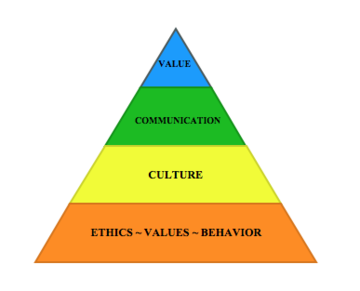
Barra’s comments bring to light what is generally accepted, but often not practiced: that the behaviors of an organization affect its performance and its ability to build strong relationships with its employees, customers, and suppliers. And the values of the culture reflect on the company’s economic value.
Getting the HOWS Right
In Don Seidman’s book HOW he writes, “How we do what we do has always mattered. But today, how we behave, consume, build trust, and relate to others matters more than ever in ways it never did before…all behavior is guided by values…[and we] first need to build cultures that value humans and behavior at their core…Those already getting ahead [innovating] understand that the best, most certain, and most enduring path to success…now lies in behavior — getting our HOWS right over time.”
Our 2015 lecture series Translating Ethics: HOW We Create Value for Our Members focuses on the question of how. How people are making a difference, are serving their communities, are empowering others to make a difference. How an organization’s principles and values are in line with its actions. How conflicts are resolved, and how individuals treat others. And how our values create value for our members.
Ron Schmidt is with CBS Certified Public Accountants, LLC, Solon, Ohio and can be reached at rschmidt@cbscpasllc.com or 440-542-1536 ext 28.