By Frank J. Diekmann

I’ve been lucky. Lucky to fall into a career I most certainly never planned. Lucky to have visited all 50 states and a good part of the world thanks to an industry/movement I knew zilch about when I started. Lucky to have met a lot of people who haven’t been and still aren’t half-bad—in fact, a few have even been pretty good to know.
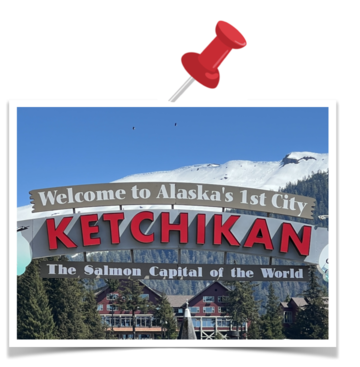
But I have to give credit to the Alaska league and the host credit union, Tongass FCU, and its CEO, Helen Mickel, for its recent annual meeting in Ketchikan, for making me even luckier and for being such wonderful hosts.
The trip was also an opportunity to see why Tongass FCU has taken a unique approach to serving members with its “branches,” which was featured during a recent Filene webinar here. (Mickel also authored a piece on a merger her credit union has gone through that is one of the most-read pieces on CUToday.info, which you can find here.)
Overall, it was among the most unique visits I’ve had in this job, and I thoroughly enjoyed the opportunity to speak to the assembled league credit unions in Southeastern Alaska. Whether they share that enthusiasm, of course, is a different discussion.

So, as I wrap up this long road trip travelogue that involved five time zones, planes, trains and automobiles (and boats), experiences I’ve had a thousand times before and experiences that were fun-to-be-part-of firsts, here are a few notes from the meeting in Ketchikan as well as from a final meeting in Las Vegas, two places that could not be, well, I’m sure you know.
Grab Your Luggage, Catch the Ferry
If you haven’t been to Ketchikan, which is part of the famed Inside Passage, should you not arrive by cruise ship or fishing boat (there are no roads to the city), it involves landing at an airport on Gravina Island, walking to the bottom of a hill and catching a ferry across the Tongass Narrows to Revillagigedo Island, and then heading to town. And yet it's still much faster than getting to many larger cities from their airports.
It’s Not About the Product
Meanwhile, at the meeting itself, opening keynoter Gigi Hyland, executive director of the National CU Foundation, told the Alaska league meeting her organization has been reconfigured to focus more on financial health to manifest the credo “people helping people.”
“People come to the credit union for money, but what they are really trying to do is solve a problem,” said Hyland.
To help them do so, Hyland noted the Foundation has started its journey on “financial well being for all” by doing research on 28,000 people in conjunction with the Financial Health Network. As have other surveys, the NCUF’s own work confirmed most Americans who could not cover a $400 expense in an emergency.
One other point emphasized by Hyland and which I’ve heard on the road multiple times in recent weeks: financial wellness is not about financial education.
“We are seeing people slip from healthy to coping, and this is where the opportunity for credit unions is,” said Hyland. “Why is this an opportunity? Eighty percent of consumers expect their PFI to help them improve their financial health. Fourteen percent of consumers strongly agree that their PFI actually does this. When a consumer feels their institution supports their well-being, the business case shows they are three times more likely to recommend their PFI, and two times more likely to continue the relationship over the next five years, and five times more likely to purchase additional products.”
You can read the full story here.
New CEO is Welcomed As Former CEO Hits the Road
During the meeting the Alaska league formerly welcomed its new CEO, Tim Sullivan, formerly of Global Credit Union, while its former CEO, Dan McCue, was on hand and honored and recognized several times. McCue’s plan now is to pick up a new RV in Oregon and to travel around the Lower 48, so keep an eye out for him.
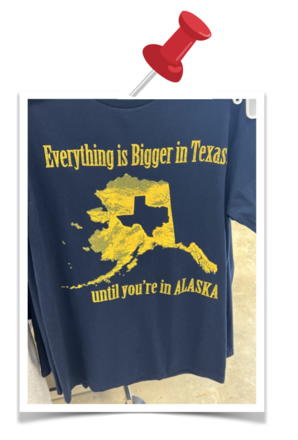
Sorry, Lone Star State
Texans, as you may have heard, are pretty fond of boasting of how everything is bigger in their state. For many in Texas, attendance at a CU event in the state can mean a long haul. But that perspectiive is so Lower 48, as the long journey involved for some of the attendees at the Alaska annual meeting demonstrated.
I rode part of the way with some board members from Northern Skies FCU as they headed home to Fairbanks beginning with Alaska Airlines’ famed “Milk Run,” a series of short hops up the Inside Passage from Ketchikan to Wrangell, Wrangell to Petersburg, Petersburg to Juneau, and Juneau to Anchorage, some 777 miles in all.
As the flight attendants announced in their practiced way, there would be no getting off the plane to stretch your legs, as several of those “airports” lack “amenities.” It's also shocking/fun to hear the captain announce just moments after wheels up following takeoff that those same flight attendants should prepare the cabin for arrival.
For the folks headed on to Fairbanks, it was another flight of 360 miles to their homes, and it is only because it’s the Land of the Midnight Sun that anyone is able to say it’s just a day-long flight.
As speaking of Texas, as the t-shirt for sale in Alaska broadcasts at right, the folks in the 49th state believe they hold the real bragging rights.
It’s Similar, Except for the Differences
On a long, mostly isolated stretch of the highway between Anchorage and Fairbanks there is a store we’ll generously call “rustic” that has been through some rough Alaska winters and that sits just off the road. Its name: “Wal Mikes.”
The Ballad of the Aleutian Ballad
Among the excursions held as part of the Alaska meeting was a trip on the Aleutian Ballad. The ballad, in this case, must be a country song about tough times and then redemption.
The Aleutian Ballad was one of the first boats to be featured on the TV show Deadliest Catch. The boat, which took attendees on a tour of the Tongass Narrows waters for several hours, has been retrofitted with two decks of seats in a U-shape configuration designed for the demonstrations of the fish/crab catches the boat puts on for tourists who arrive on cruise chips each day during the summer (making for a different kind of catch and harvest for the Aleutian Ballad).
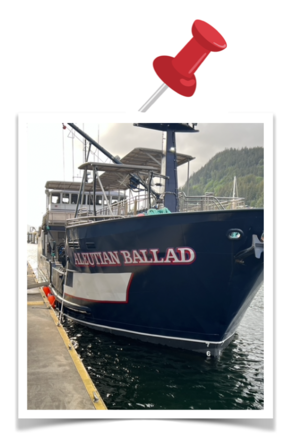
But that wasn’t the most interesting part. Instead, it was the Titanic-esque mishaps and the boat’s resurrection story.
The captain and part-owner of the boat shared that the Aleutian Ballad had been in at least two significant mishaps, either of which should have sent her to the bottom. Indeed, the captain recalled how he had been aboard the boat when it was fishing for crab in the Bering Sea and was hit by wave large enough to knock it on its side. Knowing the boat was about to sink, the crew pulled on their survival gear, abandoned ship and were rescued by the Coast Guard.
The crew survived and a day later the Coast Guard informed the captain and crew that the Ballad had been found still floating. It was towed to a dockyard and repaired.
Asleep at the Wheel
Later, on a separate fishing trip, its then captain fell asleep and the Aleutian Ballad ran into a cliff and damaged seven of its eight fuel tanks. The boat was repaired again, but only after a Lloyds of London rep told the captain, ‘Here’s a check, now find a new insurer.”
The captain found a new insurer—and he and the boat found a new line of work.
Staying on brand, as the meeting attendees were exiting the boat the “Ballad of the Edmund Fitzgerald” was playing on the loudspeakers.
New Frontier for Sister Society
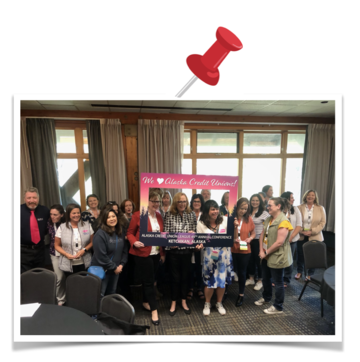
Sue Mitchell, who was the driver behind the creation of the Global Women's Leadership Network and its Sister Societies that are now around the world, travelled to Ketchikan to help launch the first GWLN Sister Society in Alaska. Mitchell said that among the issues that were discussed were the lack of child care, employee retention/ recruitment, the fact so many indigenous Alaskan women go missing, poverty, the strong matriarchal roles in Alaska, and the opportunity to build generational connections to credit unions.
The Tale of the (Yellow) Tape
Every credit union that’s in the war for talent says it is looking for those hard-to-find innovative go-getters, so I have one for you.
While riding in a taxi cab in Ketchikan I discovered the driver was also the company dispatcher. Using yellow tape she affixed to the steering wheel, the driver/dispatcher wrote notes to herself on pick-up points as calls came in, and then she contacted other drivers. When the yellow tape filled, she pulled it up and affixed new tape to the wheel. And you thought texting and driving was distracting.
Incidentally, the name of the cab company was one you’ve heard before. What I wondered was how in the world they’re not calling themselves “Ketch-i-Cab?” Remember, you heard it heard first.
Tell Us, What is the News of the World?
It wasn’t that long ago that places like Ketchikan were fortunate to get mail once or twice a year, and the latest “news” could be months old by the time it arrived via ship.
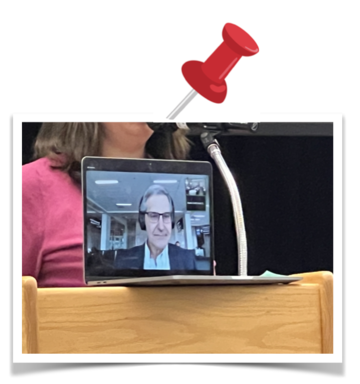
Mike Schenk, 'speaking' to Alaska meeting.
The stark contrast from those days to where we are today (when everything works) was on display during a presentation given by CUNA’s Mike Schenk, who was unable to attend due to travel issues and who instead spoke to the group via a virtual connection from thousands of miles away. The sound quality was so good it was as if he was in the room with the rest of us. Schenk, deputy chief advocacy officer and chief economist with CUNA, offered some thoughts around the economic outlook and credit union operations, the banking crisis, and consumer/member financial profiles.
Schenk noted banks have pulled back due to instability in the market in a “pretty dramatic way,” and observed the “Fed has effectively stated the goal is to put about 1.5 million people out of work.”
Inflation Forecast
Schenk said he and others CU economists who are part of a working group believe the Fed is done with the rate increases—at least for now--in part because of what has happened to some banks and which has led to failures.
Schenk and the other economists are forecasting that inflation will be brought under control and will end 2023 at 3.5%, with inflation in 2024 at 2.5%, although he added, “the diversity of opinion in our six-person group has never been wider in the 31 years I’ve been with CUNA.’
A Piece of History
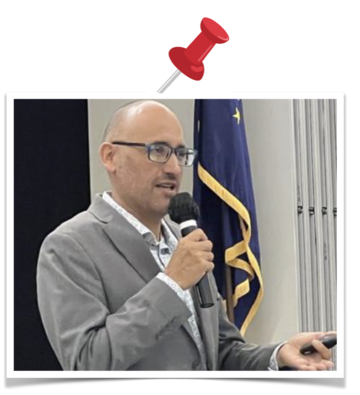
Edgar Martinez, making history.
The Alaska league meeting made some credit union history. As observed by Edgar Martinez, senior director with TruStage’s Multicultural Business Strategy Group, who spoke to the event on the Friday before CUNA Mutual--formed in 1935 and an icon in the U.S. CU community--officially changed its name to TruStage: “I will be the last person to give a presentation on behalf of CUNA Mutual.”
Martinez shared numerous interesting insights from CUNA Mutual’s extensive research conducted as part of “What Matters Now 2022: A Multicultural and Multigenerational Consumer Lens.” You can read more about it here.
And Now for the Real World
Still with me on this last leg of the road trip? Then good news, as we leave all that fake scenery in Alaska for the authenticity of Las Vegas and Origence’s Lending Tech Live event, held at the Cosmopolitan Hotel.
The Top of the Funnel
For decades and through too many new car models to count, the indirect auto lending model was as consistent as cars themselves, with their internal combustion engines and the need for gas. But that model has change as fast as a Tesla can accelerate, and the old CU Direct model so many credit unions cuddled up to has evolved, as has the CUSO itself, which is now Origence.
Origence CEO Tony Boutelle addressed much of that change, including how the company is responding to what’s happening in auto retailing, what might lie ahead with EVs, the other channels in which it offers lending solutions, and why the “top of funnel” has become so critical.
Car dealers, he reassured, are “not going away.” But the percentage of loans being originated inside dealerships is eroding, and CUs need to respond. You can read more about that here.
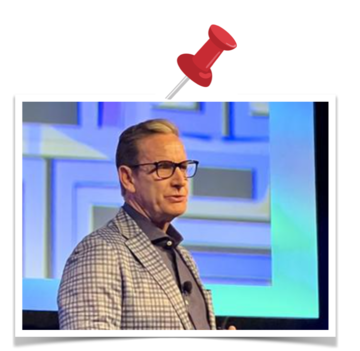
Tony Boutelle speaking in Las Vegas.
Shifting More Than Gears
Aleks Bogoeski, SVP-product and partnerships with Origence, said the good news is credit unions on the CU Direct Lending platform have over the last 18 months seen the largest growth in 10 years in both new and used car financing.
But not “everything is rosy,” he added, pointing to the shifts that are now well underway, including that 25% of car purchases are forecast to be online by 2025—just 18 months from now--up from 10% in 2020.
He outlined a number of other shifts, including EVs, as well as some strategic decisions credit unions need to be making, here.
WTF? Here’s the Answer
During his presentation to the Origence meeting, Filene CEO Mark Meyer said credit unions have been facing a number of existential “WTF” moments. You know, “What the Filene?”
Suggesting credit unions are in the midst of a “Renaissance,” Meyer observed, ““Historically, pandemics have forced humans to break with the past and imagine their world anew. This one is no different. It is a portal, a gateway between one world and the next.”
Thy Renaissance readers can find out more here.
The Following Was Written by a Human. For Now.
In his opening remarks to the Origence event, CEO Tony Boutelle joked that the company was changing its name to OrigenceAI, so that it’s valuation would soar and it could cash in.
Behind the humor, however, was the very serious recognition of how rapidly artificial intelligence is driving change in business practices and solutions, almost faster than, well, humans can process.
Among those addressing the Origence meeting was Hilary Mason, cofounder and CEO of Hidden Door, a game studio that uses machine learning, who prior to that was also co-founder and CEO of Fast Forward Labs, a professor of machine learning and more. Mason attempted to help credit unions to better understand not just AI, but how to know if it’s working.
First, Mason acknowledged a paradox.
“We are in a moment when AI is in the news in ways that contradict each other. In one way, it’s the future of all business,” she said. “And then we have AI leaders who have released a letter saying it is an existential threat that’s on par with pandemics. The technology has come to the point where it is useful, where it can potentially do harm, and where everyone is trying to figure out what it actually is.”
Points to Ponder With Your Human Brain
Among other points made by Mason:
- Understanding what good, meaningful results mean when it comes to AI was defined by Mason as “consistent decisions across an organization.”
- “It’s natural to think about this only in applications where you are spending money. It’s easy to count the dollars saved. The organizations that do this well also look for growth opportunities. It’s not just about automation.”
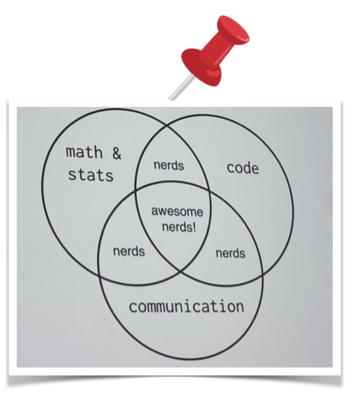
- “To be really great at this as a job you have to do these three things. You have to be able to understand the mathematics well enough to build the models to know what you're doing. You need to be able to code. Some data scientists and AI folks are excellent software engineers, and some are not. And the third one is the most important, and that's communication.” (To that end, she shared the graphic at right.)
- She said the background of someone working in AI is irrelevant, and said the person who’s best positioned to think about where the machine learning and the AI is going right is “usually not the CEO…(Instead), it is usually the person who is out there with the product, with the customers. They're either in sales or support. It is the person who sees the behavior every day.”
For the full story, give this a read, or have ChatGPT read it to you.
Panel on Women in Credit Unions
During the Origence meeting, there was a pretty interesting panel discussion on women’s leadership that featured three women and one man discussing issues that included gender equality in credit unions, how women often sell themselves short, how their organizations have tackled the challenges and more. It’s a worth a review.
May Need a GoFundMe Page
A final observation from a road trip that has included Tucson, Boston, New Hampshire, Nashville, Bowling Green, Florida, Alaska, Las Vegas and the unavoidable ATL.
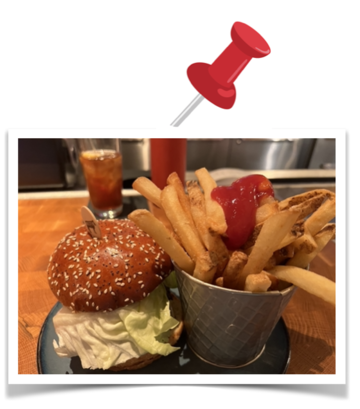
Of all the places credit unions have meet so far in 2023, I’ve been to Las Vegas three times so far and have at least two more visits to go. Listen, I get why CU associations and CUSOs and others hold their meetings in Glitter Gulch: it draws attendees, and meeting revenue is a big slice of the income pie for many.
But doesn’t it feel uncomfortably hypocritical to be talking about the underserved, people helping people, financial wellness and the like in the home of $300 a night (at least) hotel rooms and $49 hamburger and fries meals?
In this case, while you can literally put your money where your mouth is in Vegas, if credit unions really mean the words coming out of their mouths, it’s something that deserves some (a lot?) of rethinking.
I heard one person talking about the prices in town by saying that’s what you get when the majority of visitors are there for conventions and are traveling on someone else’s dime. But in the case of credit unions, that’s not true—it’s the members’ dimes. And a heck of a lot of them.
Thanks for letting me share my two cents, and for having joined me on this travelogue. I hope you got at least a dime’s worth of value. You can find the first three installments here and here and here.
Frank J. Diekmann is Cooperator in Chief of CUToday.info and can be reached at Frank@CUToday.info. Mr. Diekmann is also author of several new book, including the brand new “The Last Lyric,” a humorous satire about a murder investigation at the Rock & Roll Hall of Fame in which every line of dialogue is either a classic pop/rock song title or lyric. Available on Amazon, Apple iBook, Barnes & Noble and Smashwords. Mr. Diekmann is also author of a non-fiction compilation of the very best & worst he has seen and heard in covering more than 500 CU meetings and conferences, “501 Name Tags: How Everything You Need to Know About Business Can Be Learned at a Conference & Forgotten in the Trade Show.” It is available on Amazon, Barnes & Noble, Apple, Lulu, and Smashwords