

By Frank J. Diekmann
When the Terracotta Army of talking heads in Washington is blathering about the balance of power in the capital, the yammering most frequently centers on “control” of Congress or the White House, and which states might be players in the seat count.
It doesn’t get the same attention, obviously, but a much quieter states vs. federal tug-of-war has been playing out in Washington, especially over the past decades, and that is state CU supervision vs. federal supervision. In an industry where there is approximately a 60/40 federal/state split, and nearly every CU is federally insured, the latter spend much of their time working for redemption from federal preemption.
No one has had a closer seat to that battle than Mary Martha Fortney, who is retiring as president of the National Association of State Credit Union Supervisors (NASCUS), after a career in Washington that also included time spent working on Capitol Hill and for the White House.
You’re not going to hear about it on TV, unless you have a cable package with some really obscure stations, but state-chartered credit unions and their regulators have been digging in to pull on their end of the rope for some time, and have even notched a few victories, often due to work done by NASCUS.
“There has always been a natural tension between the state and federal systems, and there has been over the years an ebb and flow between the state and federal charters,” said Fortney. “Certainly in 1997 and 1998, we were seeing the flow from federal charters to state charters when the federal charter was under siege. But I think the most important thing to come from that is the importance of choice and the dual chartering system. There is still that natural tension today, but I think we have a working relationship (with NCUA) that has been enhanced over the years.”
Fortney noted that when it comes to the issue of federal preemption it isn’t just NCUA with which the various state supervisors have to wrestle, it’s all the other regulations and rule flowing out of DC from FINCEN and the CFPB and the USTD and all the other avalanche of acronyms; rules, it should be noted, that federal charters must also deal with.
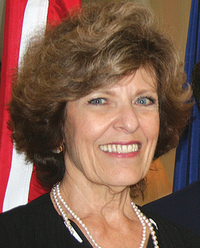
Mary Martha Fortney
Fortney credited Wayne Abernathy when he was with Treasury in the early 2000s, for ensuring state regulators have also gotten a “seat at the table” in Washington.
NCUA and state agencies now sit at the table together in 12 to 14 different working groups. “I think NCUA sees value in what state regulators bring to the table,” said Fortney. “Will we always see eye-to-eye? No, but there is respect for the state regulators’ perspective. With federal regulations, we have tried to educate credit unions about non-state laws, such as BSA, which is a Treasury program. It’s ‘complicated’ is the best way to say it. I wish state charters and federal charters only had to look to their regulators for regulations.”
Still, that “level playing field” the bankers cite more often than a winning football team does “overcoming adversity,” is often perceived to be tilted in favor of the feds. Some states, such as Arkansas, South Dakota and Delaware, have no state credit union act. But others, stressed Fortney, such as Michigan have very healthy and “robust” state charter options.
An interesting side note about state credit union acts, by the way: not one includes the words “people of modest means.” Fortney said a few do mention “thrift” as a reason for organizing and operating credit unions.
Fortney joined NASCUS in 1993, and after filling a number of positions was named president/CEO in January 2004 after having served as acting president/CEO since August 2003. During her tenure she has watched the number of NASCUS-accredited state agencies grow from seven to 26. Accreditation must be maintained annually, and requires an on-site visit from NASCUS every five years.
“NASCUS’ visibility has been a key endeavor since I was hired,” said Fortney, adding the group has increased awareness of “who we are and what is our role. We have become a spokesperson for the state systems.” While at NASCUS, Fortney has also overseen growth from three to nine employees.
Civil, Not A Civil War
NASCUS is unique, reminded Fortney in that it represents both regulators and state charters in one organization, the “regulators and the regulated. We have tried to meld the two whenever we could.” There is no similar organization with NCUA and federal charters, perhaps because there’s already been one Civil War.
Beyond those successes, Fortney points to NASCUS’ involvement with the International CU Regulators Network (ICURN), including training three interns from the Ecuadoran Superintendency of Banks, and the victory on Unrelated Business Income Tax (UBIT). And there have been other wins.
“We don’t always agree with NCUA, but we have been able to convince them to limit some rules to federal charters only,” said Fortney. “Derivatives, for example. There are not a lot of state charters in derivatives, and the agency said ‘You’re right, let’s leave state charters out.’ On supplemental capital, (we were not able to) change the FCU Act so state charters also have access to supplemental capital. We’re disappointed that there is still no supplemental capital for well-managed, healthy credit unions.”
But NASCUS continues to have items on its agenda that have yet to be checked off. Fortney said the association would like to see all the “confusing” insurance rules in one place. And NASCUS has long advocated for the NCUA board to expand to five seats and for at least one seat reserved for a state regulator.
Although Fortney has spent the last 20 years focused on state-level government agencies, she began her career working for the federal government, working four years as the Director of Agency Liaison, Office of Presidential Correspondence for the Carter White House, and another 12 years on Capitol Hill, where she was the legislative director for a congressman and the majority staff director for the Subcommittee on General Oversight and Investigations of the House Committee on Banking, Finance and Urban Affairs. So Fortney has seen plenty of life inside the Beltway, but nothing like recent years.
'Not Sure What It's Going To Take'
“I was there for 12 years and it is gridlock now,” said Fortney. “I grapple with that all the time. There is just no willingness on either side of the aisle to work together on things for the common good. It’s very different from when I started, such as with HR 1151. I’m not sure what it’s going to take to get it back on track and do things for the good of the country.”
Speaking of getting things on track, outside of credit unions Fortney has been active in Women in Housing & Finance (WHF), an association that actively promotes women in the fields of financial services and housing through professional enrichment and leadership enhancement. Fortney is currently WHF's Foundation president and has served in various other leadership roles.
“I’ve been involved in the leadership of WHF for the last 12 to 14 years. Its purpose is to promote women, and we do that through networking, lunches, programs in speaking and management skills.”
So why aren’t there more women in leadership in financial services? “There are probably better people to ask that than me,” replied Fortney. “I was the first woman to be head of a financial services trade association. Hopefully it will be a level playing field for both genders and in the future we won’t even be talking about it.”
NASCUS is now turning its own future over to Lucy Ito, who will succeed Fortney as president. Ito is leaving the California/Nevada league for the position, and has a stint at the World Council of CUs on her resume, too.
“I think Lucy inherits a very worthwhile organization that I see growing in the future,” said Fortney. “I’m confident we’re going to go further.”
Frank J. Diekmann is Cooperator in Chief with CUToday.info, and can be reached at Frank@CUToday.info.