

By Frank J. Diekmann

Imagine your members requesting—no, demanding—Sunday hours at your credit union. Convenience is important, members insist. It’s a 24/7 world, others claim. We’re owners, and we have the right, yet other members claim. So you respond, opening up from 9-3 every Sunday. And then–hardly anybody ever shows up.
That’s a little bit of how NCUA’s two board members say they feel after credit unions have beaten a drum called “transparency” for years, demanding to have at their fingertips more information on the agency’s budget and methodologies. So as I noted here previously, NCUA has complied with a site everyone demanded but no one ever visits.
During the most recent NCUA board meeting at which the 2017 and 2018 budgets were approved, Chairman Rick Metsger again touched on the issue, saying he’s come to believe it’s really more of a “punching bag” for the trade groups than it is a big concern of credit unions in the real world.
So if you’ve been wondering how to fill your day on Friday, the day after Thanksgiving, might I suggest grabbing a plate of leftovers and clicking here. Then you can give thanks that it’s there, and another thanks that you don’t have to read it all.
Misreading the Payments Tea Leaves
Lee Wetherington warned the joint meeting of the CUNA Technology Council and CUNA OpSS Council recently that a built-in bias among most credit union leaders has led them to misinterpret what’s taking place the payments space, much of which represents a threat to CUs. You can read more abou that here http://cutoday.ssd.thinkcreativeinternal.net/THE-feature/Plus-Where-An-Opportunity-Might-Be
Among some of Wetherington’s other points:
- Among the fintechs Wetherington said credit unions should take a look at is Nickel, a savings app that comes with a $5-per-month charge. It has a “pocket feature” is for savings and offers other incentives, such as dollar matching. “That’s the way the future of financial services is evolving in real time.”
- “Often in credit unions we don’t think about organizing around significant milestones in a person’s life,” observed Wetherington. “And the very first financial experience for many is an allowance. What really made me realize something generationally was taking place was when I went to pay for something and realized I didn’t have my wallet and, as a Gen Xer, I was ashamed. But my son said to me the most profound thing any parent can hear: ‘Dad, I’ll pay for the groceries.’ He paid for it with his card.” And immediately afterward, Wetherington said, he received a text alert seeking approval for a funds transfer to reimburse his son.
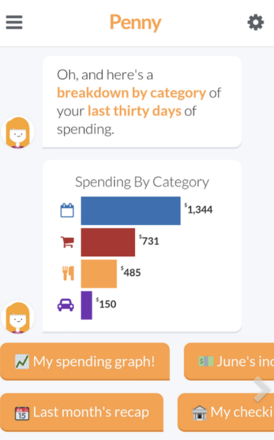
- Wetherington said CUs should also look at apps such as “Digit” and “Penny,” the latter of which is a chat-based personal finance coach that sends real time graphics on spending patterns.” In some of those apps, he cautioned, there are a number of fees.
- Wetherington chided his audience for not using a new service option and for missing what’s really happening. “You are the Technology and OpSS conference and NONE of you are ordering ahead so as not to stand in line at Starbucks?,” Wetherington said. “I feel so superior to all of your right now. The biggest problem in payments isn’t swipe vs. tap; it’s waiting in line to do one of those things.”
- Wetherington elicited groans form his audience when he asked, “How is EMV working out for you at point of sale? We used to swipe and go. Now we dip and stay. The average takes 10 seconds.” Wetherington said 10 seconds may not seem long, so he stood on stage and snapped his finger once per second to show just how long that amount of time can feel. “We have taken three steps back because we are the last ones in line on this. What’s the feeling you have when you stand in line behind someone when they are writing a check? That burning hot judgment? That’s how Apple Pay people feel when you whip out your EMV enabled card. This stuff matters.”
- Wetherington urged credit unions to recognize the opportunity to be had (and good deeds to be done) in the fact members of Gen Y really struggle with savings and spending. “Adults under 35 have a savings rate of negative 2%,” he said. “Fifty to sixty percent of Gen Yconfess they have an impulse purchase problems. Of course they do, their brains aren’t finished yet. That’s neuroscience; the human brain not finish development until late 20s or early 30s. That has a lot to do with offering financial services. What’s the answer to the impulse problem? Helping Gen Y counter that their executive function isn’t ready yet.” He said one company seeking to meet the opportunity in impulse savings features is Moven.
- What does the future hold? Not surprisingly, said Wetherington, it will be about more complexity and options. In three to five years, for instance, he said some CUs may look to adopt the “distributed credit union model” in which the credit union is just an aggregator of best of breeds, fintechs included, “for a really excellent member experience.”
- Wetherington said credit unions should classify fintechs according to “their attitude toward you.
Do they want to disintermediate you? The vast majority want to partner with you or serve you. With all those choice, please be careful. The number-one problem we all suffer from, not just as credit unions, but as vendors and fintechs, is we think more is better, that just adding these right functions to our mobile banking is right.”

-
Wetherington asked CUs to ask themselves, “If you don’t have a core experience, how can you wow the member?
The credit unions that are really going to lead are the ones that realize what to take away from the experience. What is a good member experience? It’s taking a member from a neutral or negative positive emotion to a positive emotion.”
Frank J. Diekmann is Cooperator in Chief at CUToday.info and can be reached at Frank@CUToday.info and followed at @FrankCUToday